Hemodialysis (HD) takes some wastes and water out of your blood. Your lifeline on HD is a vascular access. An access is a way to reach your blood to clean it.
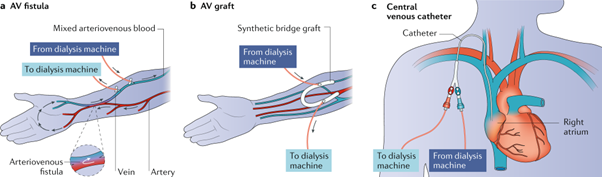
There are three types of vascular access for dialysis:
An arteriovenous (AV) fistula. Dr Tsotetsi links an artery to a vein under the skin of your arm. An AV fistula can last for years—even decades. Fistulas are the access least prone to infections and blood clots.
An AV graft. Dr Tsotetsi links an artery to a vein under the skin of your arm with a piece of synthetic or bovine vein. Grafts tend to need declotting procedures and a new one must be placed every few years.
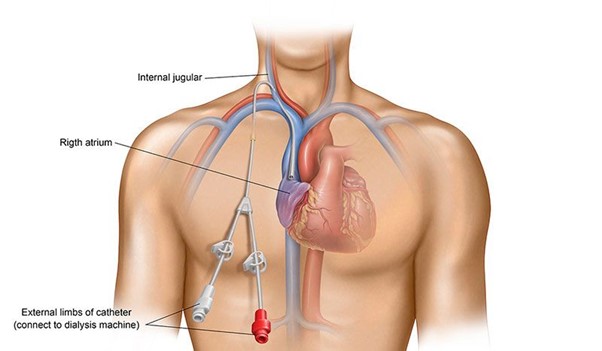
An HD catheter. A catheter is a Y-shaped plastic tube. One end goes in a central vein in your chest and ends in your heart. The other two ends come out through the skin of your chest. Or, an HD catheter can be placed in a large vein in the groin..
When it is needed
The kidneys perform functions essential to sustaining life. They continuously clean the blood, flushing out impurities and balancing body chemistry. They also help regulate both blood pressure and the quantity of fluid leaving the body.
In the event that the kidneys fail, either at the final stage of chronic kidney disease or as the result of an acute kidney injury, dialysis, a group of alternatives to cleanse the blood outside of the kidneys is often indicated.
Patients new to hemodialysis must undergo on of the above procedures to establish vascular access.