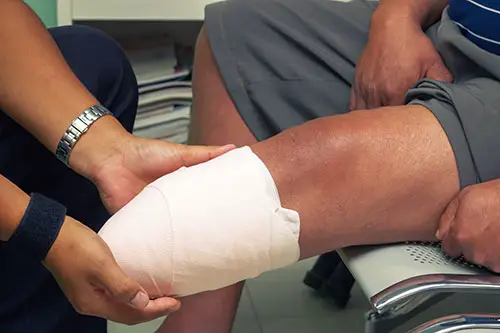
• Amputation is removal of all or part of a limb. Amputations nearly always involve the lower limb and this leaflet will concentrate on lower limb amputation.
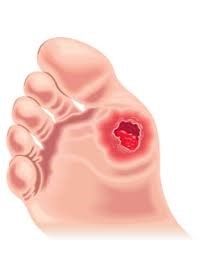
• Debridement is the medical term used to describe removal of dead tissue. Tissue death can occur with gangrene, ulcer, trauma or infection.
Sometimes the circulation in a leg can be reduced to such a severe level the leg can no longer stay alive. Losing the limb through amputation is very much the last resort. In most cases there is time for you to discuss this with your family and plan for some rehabilitation – in others the surgery has to be undertaken as a matter of urgency to save your life.
What is debridement and amputation
Continuous severe pain in the leg, severe infection, excessive gangrene and trauma are the commonest reasons for amputation. If you have diabetes there may be a combination of severe infection and arterial disease. The main sites of major amputation are above the knee, through the knee (uncommon) and below knee.
Minor amputation includes removal of one or more toes.