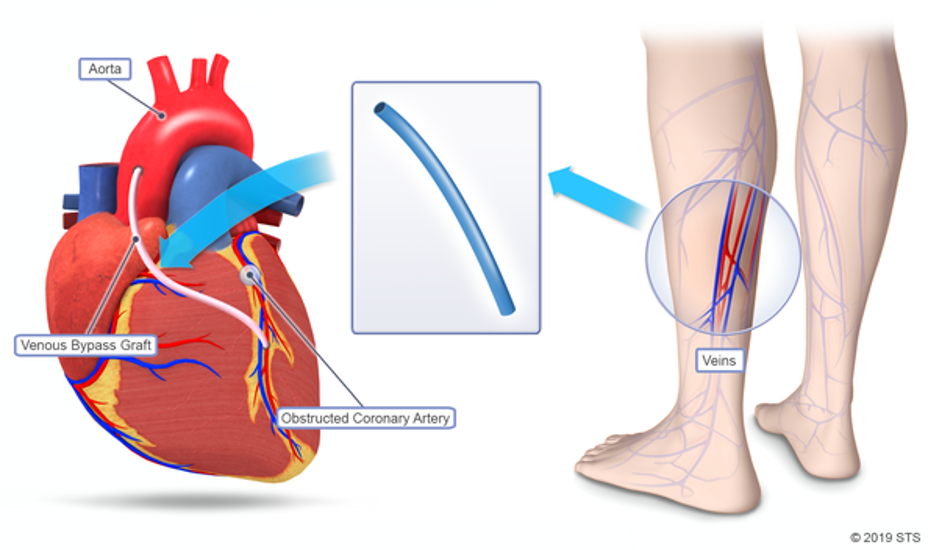
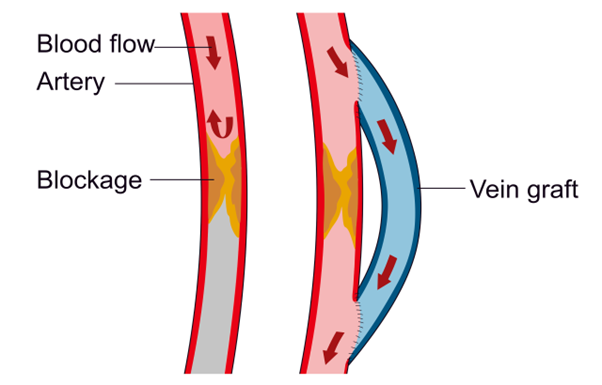
Arterial bypass surgery treats your narrowed arteries by creating a new pathway around a section of the artery that is blocked.
Your arteries are normally smooth and unobstructed on the inside but they can become blocked through a process called atherosclerosis, which means hardening of the arteries.
As you age, a sticky substance called plaque can build up in the walls of your arteries. Cholesterol, calcium, and fibrous tissue make up the plaque. As more plaque builds up, your arteries can narrow and stiffen.
Eventually, as the process progresses, your blood vessels can no longer supply the oxygen demands of your organs or muscles and symptoms may develop.
Bypass surgery is commonly performed on heart arteries (coronary bypass surgery), but vascular surgeons also use bypasses to treat peripheral arterial disease.
Surgeons perform bypass surgery on heart arteries and to treat leg artery disease , which is hardening of the arteries in the leg.
Common Symptoms
Symptoms can range from pain in the legs during activity, to the development of non-healing ulcers or gangrene (tissue death) in more severe cases.