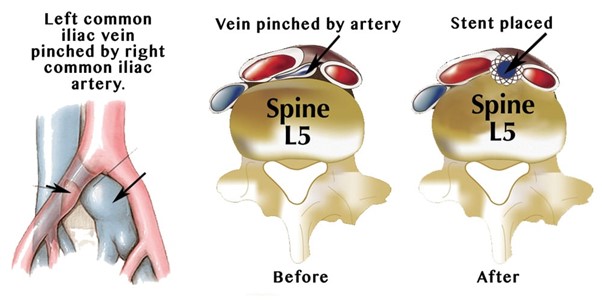
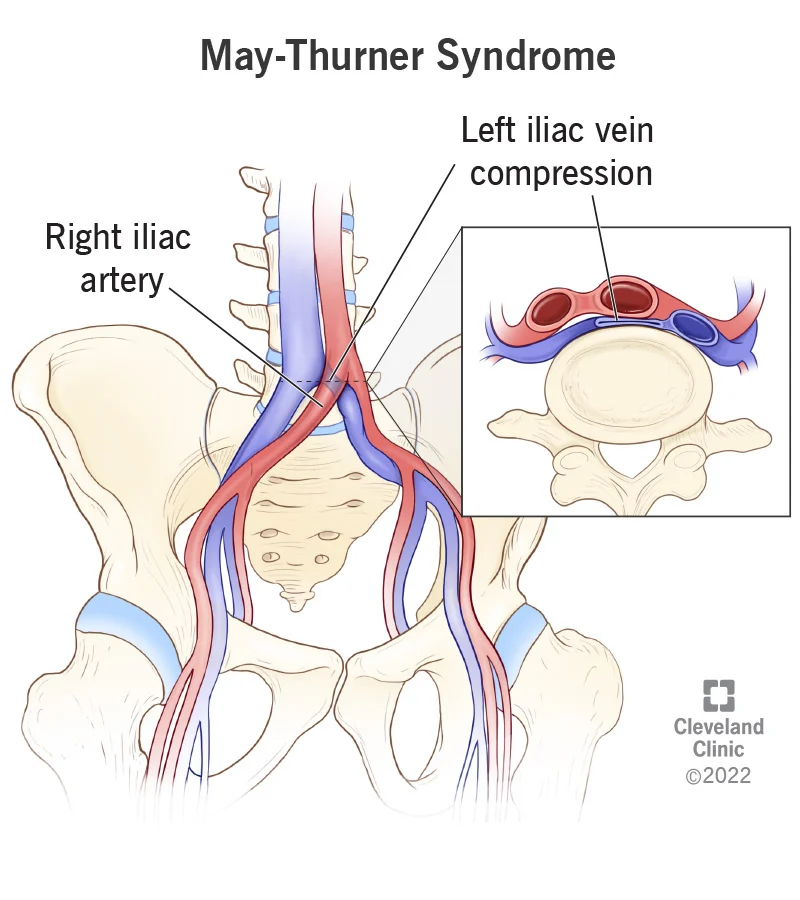
Iliac Vein Compression Syndrome is when your right iliac artery presses on (compresses) your left iliac vein. Your right iliac artery is the main blood vessel that carries blood to your right leg. Your left iliac vein is the main blood vessel that carries blood from your left leg back to your heart. IVCS may interrupt typical blood flow through your legs.
IVCS makes it harder for blood to flow back to your heart. Instead, it may pool in your legs and can develop into deep vein thrombosis which may result in the following symptoms:
Discoloured skin on your leg
Enlarged, swollen leg veins
Pain, throbbing or tenderness in your leg
Swelling and heaviness in your leg
How is it treated?
IVCS treatment focuses on improving blood flow and reducing your risk of developing deep vein thrombosis. The following treatments may be recommended:
Angioplasty and stenting: Dr Tsotetsi inserts a catheter with a balloon at the end into the left iliac vein. When it’s in the correct position, the balloon inflates to open the vein. Your provider then places a small mesh tube (stent) in the vein to keep it open and removes the balloon.
Bypass surgery: Dr Tsotetsi uses a small piece of tissue from a donor or from another part of your body to build a new route around the compressed portion of the iliac vein. This restores typical blood flow.
Surgery to move the right iliac artery: Dr Tsotetsi may perform a procedure to reduce compression on the left iliac vein by moving the right iliac artery. He may place a piece of tissue between the vein and artery to decrease the pressure.